


Do I Need Fume Extraction? (And Which System)
Solder fume is a genuine health hazard and a legal duty to control. This guide explains why, what the law expects, and how to choose the right extraction for your bench or production line.
In this guide
1.Why solder fume is a hazard
The smoke that rises when you solder isn't harmless — it's a fine cloud of rosin (colophony) flux fume and metal particulate. Rosin-based solder flux fume is one of the most common causes of occupational asthma in the UK, and once someone is sensitised the effect can be permanent. Lead-free alloys such as SAC305 don't remove the risk: they still release tin and other particulate that are respiratory hazards.
The danger isn't the occasional whiff — it's regular, uncontrolled exposure at the bench. The good news is that it's straightforward and inexpensive to control at source.
2.Your legal duty (COSHH)
In the UK, the Control of Substances Hazardous to Health Regulations 2002 (COSHH) require employers to prevent or adequately control exposure to substances hazardous to health — and solder fume is explicitly one of them. For soldering, the expected control is local exhaust ventilation (LEV): capturing the fume at source before it reaches the operator's breathing zone.
- The extraction nozzle should be within about 150 mm of the soldering point for effective capture.
- A written COSHH assessment must be in place for the flux and solder you use.
- Under COSHH Regulation 9, LEV systems must be thoroughly examined and tested by a competent person at least every 14 months.
3.Types of extraction
3.1Tip extraction
Extraction built into or right beside the iron, capturing fume at the tip — the point of highest capture efficiency. Ideal for individual irons and where bench space is tight. Best where an operator solders continuously at one iron.
3.2Bench-top & arm extraction
A flexible arm and nozzle positioned over the work area, drawing fume away from the operator. Versatile for a single busy bench doing varied work, and easily repositioned for different tasks. The most common choice for a professional electronics bench.
3.3Volume extraction (multi-operator)
Larger, ducted systems that serve several benches or operators from one unit — the right approach for a production line or a room with multiple soldering stations. Sized to the number of operators and the duty cycle.
3.4Fume cabinets & specialist processes
Enclosed fume cabinets contain and extract fume for specific processes. Beyond soldering, Donaldson BOFA also make application-specific systems for laser marking, printing, additive manufacturing and mechanical processes — if your process isn't standard hand-soldering, talk to us about the right unit.
4.Which system for which setup
| Your setup | Recommended extraction |
|---|---|
| Single iron / occasional soldering | Tip extraction |
| One busy professional bench | Bench-top arm or small volume unit |
| Multiple benches / production line | Ducted volume extraction system |
| Specialist process (laser, printing, etc.) | Application-specific BOFA unit |
5.Why filters matter
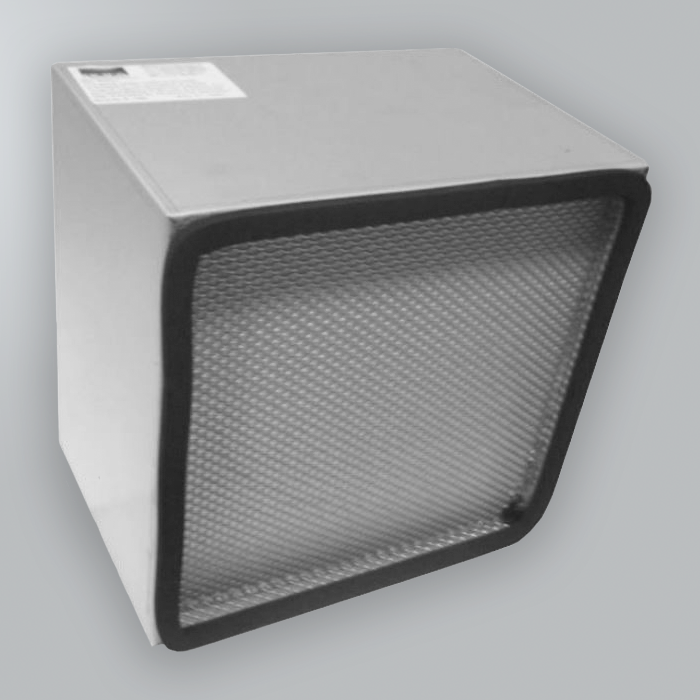
An extraction system is only as good as its filter. Most units combine a pre-filter, a HEPA particulate filter and a gas/carbon filter to capture both the particulate and the gaseous, odorous components of solder fume. Filters are consumables: as they load up, capture drops, so they must be replaced on schedule. A blocked or exhausted filter means little or no protection — even if the unit still runs.
6.LEV testing & compliance
Buying extraction is only half of your COSHH duty — you must also keep it working and prove it. Under COSHH Regulation 9, every LEV system must be thoroughly examined and tested at least every 14 months by a competent person, with records kept. This confirms the system still captures fume effectively and protects your staff.
Grove Sales offers a fully compliant LEV testing service — we examine, test and certify your extraction and give you the documentation you need for audits and inspections.
7.Common questions
Is solder fume really that harmful?
Yes. Rosin flux fume is a recognised cause of occupational asthma, and controlling it is a legal duty under COSHH — not optional.
Do I still need extraction for lead-free solder?
Yes. Lead-free removes the lead, but the flux fume and metal particulate hazards remain, so extraction is still required.
How close does the nozzle need to be?
Within about 150 mm of the soldering point. Capture efficiency falls off quickly with distance.
How often must LEV be tested?
At least every 14 months under COSHH Regulation 9 — and Grove Sales can carry out that testing for you.