


How to Choose Inspection & Magnification Equipment
From magnifying lamps to ergonomic microscopes and digital inspection systems — a practical guide to seeing your work clearly and comfortably, whatever the task.
In this guide
1.Why the right magnification matters
Modern electronics are too small to assemble, inspect or rework reliably with the naked eye. Fine-pitch SMD components, tiny solder joints and hairline PCB defects all demand magnification — and inspecting solder joints to IPC standards simply isn't possible without it.
The right equipment does more than magnify. It gives you a clear, well-lit, comfortable view so you can work accurately for hours without eye strain or neck ache — which directly affects quality, throughput and the wellbeing of your operators. The wrong choice leads to fatigue, missed defects and slow work.
2.The four types explained
2.1Magnifying lamps
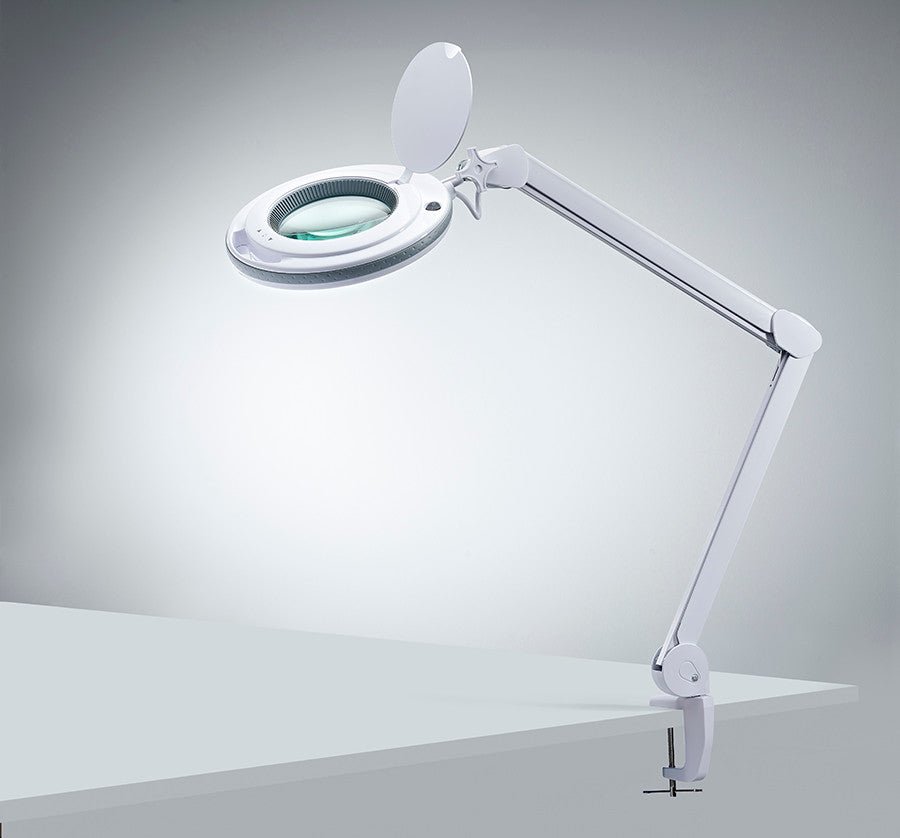
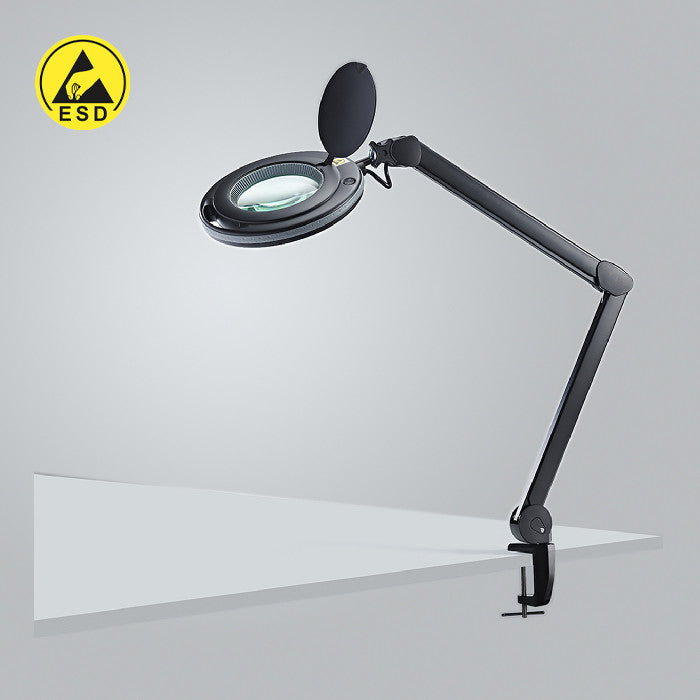
A magnifying lamp combines low-power magnification (typically 2–5×) with excellent shadow-free LED lighting on a flexible arm. It's the ideal, affordable starting point for general assembly, soldering and everyday bench work where you need a clear, well-lit view rather than high magnification. Comfortable for long periods and easy to position over the work.
2.2Stereo microscopes
A stereo microscope gives a true three-dimensional view at higher magnification (typically 10–40×), which is essential for fine-pitch SMD rework and inspecting solder joints. The 3D depth perception lets you manipulate tools and components accurately under the lens. The traditional choice for detailed rework and quality control.
2.3Ergonomic, eyepiece-free microscopes
Vision Engineering's award-winning systems (Mantis and Lynx EVO) replace cramped eyepieces with a large, comfortable viewing window. Operators sit in a natural, upright posture with both eyes open — dramatically reducing the eye strain and neck fatigue of all-day microscope work, while making the tool faster to use and easier to share. The best choice where inspection or rework runs for hours, or across multiple operators.
2.4Digital microscopes & inspection cameras
Digital systems such as the Vision EVO Cam display the magnified image on a screen rather than through eyepieces. That makes the view easy to share, ideal for training and team inspection, and — crucially — lets you capture images, record and measure. The right choice where you need documentation, on-screen measurement, remote viewing or a shared inspection station.
3.The factors that matter
- Magnification range — match it to your smallest components. General assembly needs only 2–5×; fine-pitch SMD inspection wants 10–20× or more. More isn't always better: higher magnification narrows the field of view.
- Field of view & working distance — you need enough space under the lens to get an iron and tweezers in and enough field to see the area you're working on. Critical for rework.
- Depth of field — how much stays in focus at once. Important for taller, three-dimensional assemblies.
- Ergonomics — for all-day use this is the single biggest factor. Eyepiece-free systems keep operators comfortable and productive far longer than traditional microscopes.
- Lighting — shadow-free LED illumination makes a huge difference to what you can actually see. Built in on lamps; an accessory on many microscopes.
- ESD safety — any equipment used at an ESD bench should be ESD-safe. See our ESD protection guide.
- Documentation & measurement — if you need to record or measure, choose a digital system.
4.Which tool for which job
| Your task | Best choice |
|---|---|
| General assembly & soldering | Magnifying lamp (2–5×) |
| Fine-pitch SMD rework & joint inspection | Stereo microscope (10–40×) |
| All-day inspection / multiple operators | Ergonomic eyepiece-free (Vision Mantis / Lynx EVO) |
| Documentation, measurement, training, remote viewing | Digital microscope / inspection camera (EVO Cam) |
5.The ranges we stock
- Daylight magnifying lamps — LED and ESD-safe magnifying lamps for comfortable, well-lit general bench work.
- Vision Engineering Mantis — the benchmark ergonomic stereo microscope, eyepiece-free for all-day comfort (PIXO, ERGO, IOTA and Elite Cam models).
- Vision Engineering Lynx EVO — high-performance ergonomic inspection with a wide range of magnification.
- Vision EVO Cam II — digital microscope and inspection camera for on-screen viewing, capture and measurement.
Not sure which suits your bench and budget? Call us on 01202 588900 — we'll match the right system to your work, with trade pricing for workshops and OEMs.
Popular inspection & magnification
6.Common questions
How much magnification do I need?
Match it to your smallest components. A 2–5× magnifying lamp is fine for general assembly; fine-pitch SMD inspection wants 10–20× or more. Remember that higher magnification narrows the field of view, so choose the lowest magnification that lets you see the detail clearly.
Stereo microscope or digital?
Choose a stereo (optical) microscope for hands-on rework — the 3D depth perception is essential for manipulating tools under the lens. Choose digital when you need to share the view, capture images, measure, or train.
Why go eyepiece-free?
Traditional microscope eyepieces cause eye strain and poor posture over long sessions. Vision Engineering's eyepiece-free systems keep operators comfortable and productive all day, and are far easier to share.
Does it need to be ESD-safe?
For work on static-sensitive electronics, yes — any equipment at an ESD bench should be ESD-safe.