


How to Choose Hand Tools for Electronics
Cutters, pliers, tweezers, screwdrivers and more — a practical guide to choosing precision, ESD-safe hand tools that protect your components and your hands.
In this guide
1.Why precision hand tools matter
General-purpose tools have no place on an electronics bench. Fine component leads, delicate SMD parts and static-sensitive devices need precision, ESD-safe hand tools designed for the job — anything else risks crushed leads, damaged pads, marred finishes and static damage.
Good hand tools also protect the operator. Well-designed, ergonomic tools with cushioned grips reduce fatigue and strain during repetitive assembly and rework, which matters as much for quality as it does for comfort. Buying quality once is cheaper than replacing cheap tools — and the components they damage.
2.The essential hand tools
2.1Cutters
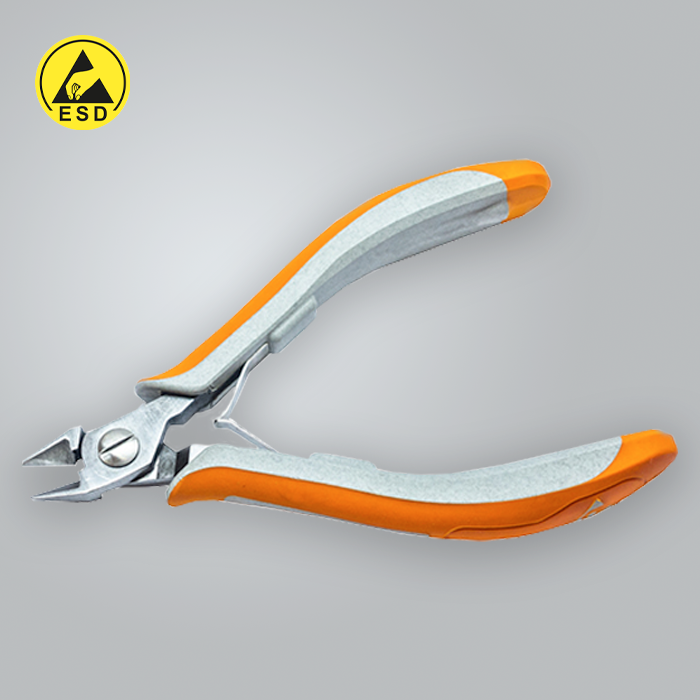
Precision cutters trim component leads and wires cleanly without crushing or stressing the joint. Flush (or semi-flush) cutters leave a clean, flat cut with no sharp stub — important for lead trimming after soldering. Micro-shear cutters give the finest, most controlled cut for delicate work. Match the cutter to the wire gauge and never use electronics cutters on hardened wire, which chips the edge.
2.2Pliers
Pliers form, grip, bend and hold. Long-nose pliers reach into tight spaces and position components; round-nose pliers form neat loops in leads; flat and bent-nose pliers grip and hold. Smooth jaws are preferable for delicate work to avoid marking components. As with cutters, precision and ESD-safe handles are what set electronics pliers apart from general tools.
2.3Tweezers
Tweezers are indispensable for handling and placing small SMD components. Look for fine, precisely-aligned tips, anti-magnetic stainless steel (so they don't attract or hold ferrous parts) and, for all-day use, ESD-safe cushion grips that stay comfortable. Different tip styles — straight, angled, fine-point, flat — suit different components and tasks.
2.4Screwdrivers
Precision screwdrivers handle the small fixings in electronic assemblies and enclosures. Choose the correct tip type and size to avoid damaging screw heads, use ESD-safe handles at the bench, and consider torque-controlled drivers where fixings must be tightened to a defined value for reliability or warranty compliance.
2.5Knives, scalpels & scissors
A sharp blade is essential for trimming, scoring and cutting. Scalpels and craft knives handle fine work such as trimming conformal coating or scoring boards; scissors cut tapes, films and leads. Safety ceramic-bladed knives are a popular choice where cut safety is a priority, staying sharp far longer than steel and greatly reducing injury risk.
3.The factors that matter
- ESD safety — dissipative handles that don't hold a charge are essential for work on static-sensitive electronics. See our ESD protection guide.
- Precision & quality — accurately-aligned tips, hardened steel and good edge life. Quality tools cut cleaner, last longer and protect your components.
- Anti-magnetic — important for tweezers, so they don't attract or retain small ferrous parts.
- Ergonomics — cushioned, comfortable grips reduce fatigue during repetitive assembly and rework.
- The right tool for the cut — flush cutters for lead trimming, micro-shears for fine work, the correct plier nose for the task.
- A trusted brand — sticking to established makers such as Erem, Piergiacomi, Engineer or GTEK protects your investment and guarantees replacement availability.
4.Which tool for which job
| Task | Tool |
|---|---|
| Trimming leads flush after soldering | Flush / semi-flush cutters |
| Finest, most delicate cutting | Micro-shear cutters |
| Forming leads & positioning parts | Long-nose / round-nose pliers |
| Placing & handling SMD components | Anti-magnetic ESD tweezers |
| Assembly & servicing fixings | Precision / torque screwdrivers |
| Trimming coating, scoring, cutting tape | Scalpels, knives & scissors |
5.The brands we stock
- Erem — premium Swiss precision cutters, pliers and tweezers for professional electronics.
- Piergiacomi — Italian precision micro-shears, cutters and pliers.
- GTEK — excellent-value ESD-safe cutters, pliers and tweezers.
- Engineer — specialist Japanese hand tools, including screw-removal pliers.
- Xcelite, CK & Draper — trusted general and precision tooling.
- Slice & Swann Morton — safety ceramic blades and precision scalpels.
Not sure which tools you need? Call us on 01202 588900 — we'll help you put together the right kit, with trade pricing for workshops and OEMs.
Popular hand tools


6.Common questions
Why not just use general-purpose tools?
Precision electronics tools protect fine leads and delicate components, cut cleanly, and are ESD-safe. General tools risk crushing leads, marring parts and causing static damage.
What does “ESD-safe” mean for a hand tool?
It has dissipative handles that don't build or hold a static charge — essential when working on static-sensitive electronics at a grounded bench.
Flush cutters or standard cutters?
Flush (or semi-flush) cutters leave a clean, flat cut with no sharp stub — the right choice for trimming component leads after soldering.
Why anti-magnetic tweezers?
Anti-magnetic tips won't attract or hold small ferrous parts, giving you clean, controlled handling of tiny components.