


10 Common Soldering Problems and How to Fix Them
Most soldering faults come down to a handful of causes — heat, cleanliness, flux and technique. Here are the ten most common problems, why they happen, and how to put them right.
The ten problems
A reliable solder joint is bright and smooth, with a concave fillet drawn neatly toward the component lead. When something goes wrong, the cause is almost always one of four things: not enough (or too much) heat, a dirty or oxidised surface, the wrong amount of flux, or a slip in technique. Work through the ten problems below and you'll fix the vast majority of soldering faults.
1.Cold or dull joint
Symptom: a dull, grainy or lumpy joint rather than a bright, smooth fillet — a common cause of intermittent faults.
Cause: the joint didn't reach full temperature, or the component moved as the solder solidified.
Fix: heat both the pad and the lead together for 1–2 seconds before applying solder, use an adequate iron temperature (around 320–360 °C for leaded, 340–380 °C for lead-free), and hold everything still until the joint has fully cooled.
2.Poor wetting — solder won't stick
Symptom: solder balls up and sits on the surface instead of flowing out and bonding to the pad and lead.
Cause: an oxidised or contaminated surface, too little flux, or a temperature that's too low to activate the flux.
Fix: clean the surfaces, apply fresh flux, and make sure the iron is hot enough. Good flux is the single biggest factor in clean wetting.
3.Solder bridges
Symptom: a stray trail of solder connecting two adjacent pads or pins, causing a short circuit.
Cause: too much solder, dragging the iron too quickly, or not enough flux.
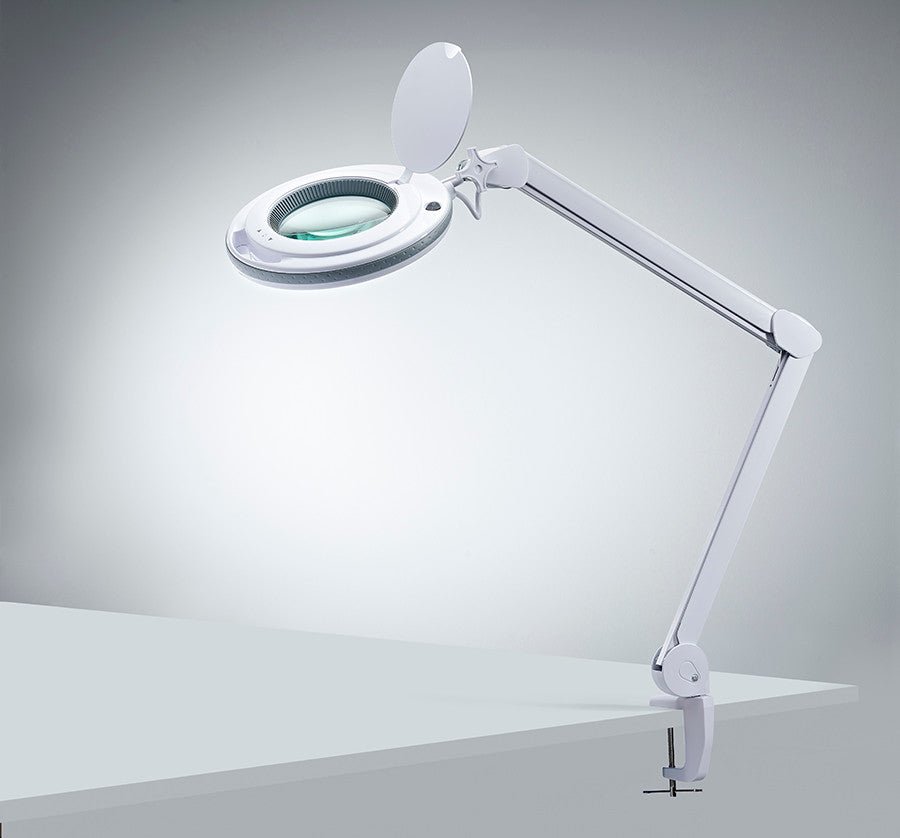
Fix: remove the bridge with desoldering braid, apply flux, and re-solder with less solder and a slower, more controlled action. Always inspect fine-pitch rows under magnification.
4.Disturbed or cracked joint
Symptom: a fractured or crazed-looking joint, often intermittent.
Cause: the component or wire moved while the solder was still solidifying.
Fix: re-flux and reflow the joint, and keep the component completely still for the two or three seconds it takes to solidify. A third-hand tool or PCB holder helps enormously.
5.Overheating & lifted pads
Symptom: a lifted pad or track, brown/scorched laminate, or a damaged component.
Cause: too much heat, or the iron held on the joint for too long — often to compensate for a poor tip.
Fix: use the lowest effective temperature, limit dwell time to 2–3 seconds, and make sure your station has the power and a well-tinned tip to transfer heat quickly. A good temperature-controlled station prevents most overheating damage.
6.Oxidised or worn tip
Symptom: the tip looks black, pitted or dull and no longer transfers heat well, making every joint slow and difficult.
Cause: a dry (un-tinned) or oxidised tip, or a tip that has simply worn out.
Fix: keep the tip tinned with fresh solder before and after use, clean it between joints on a damp sponge or brass wool, and replace it once the plating is pitted or porous. A poor tip is behind more soldering problems than people realise.
7.Insufficient solder
Symptom: a thin, starved joint with the lead barely covered and no proper fillet.
Cause: too little solder applied, or the solder didn't flow because the joint wasn't hot enough.
Fix: apply enough solder to form a smooth, concave fillet that wets both the pad and the lead — but no more. Feed the solder into the heated joint, not onto the iron tip.
8.Solder balls & spatter
Symptom: tiny balls of solder scattered across the board, risking shorts.
Cause: excess or spitting flux, too much airflow when using hot air, or old, oxidised solder.
Fix: use a moderate amount of good-quality flux-cored solder, reduce hot-air airflow, and clean any solder balls away with braid or a brush before they cause a problem.
9.Tombstoning (SMD)
Symptom: a small SMD passive (such as a 0402 or 0603) lifts up on one end like a tombstone, leaving one connection open.
Cause: uneven heating, so one pad's solder melts and pulls the component up before the other.
Fix: heat both pads evenly, use balanced pad design and the right amount of solder paste, and apply flux to help both joints reflow together. Reflow the lifted end and gently settle the part back down.
10.Flux residue & contamination
Symptom: sticky or crusty residue around joints, which can attract dirt or, with some fluxes, cause corrosion or leakage over time.
Cause: flux left on the board — water-soluble flux that wasn't washed off, or heavy no-clean residue in a sensitive area.
Fix: clean the board with IPA or a suitable cleaner where residue matters. Water-soluble flux must be fully cleaned; no-clean is usually fine to leave, but clean it from high-impedance or high-voltage areas.
Quick reference
| Problem | First thing to try |
|---|---|
| Cold / dull joint | More heat, hold still until cooled |
| Won't wet | Fresh flux + clean surface |
| Solder bridge | Braid + flux, less solder |
| Cracked joint | Reflow, keep component still |
| Lifted pad | Lower temperature, shorter dwell |
| Poor heat transfer | Clean & re-tin (or replace) the tip |
| Starved joint | More solder, into a hot joint |
| Solder balls | Less flux, clean with braid |
| Tombstoning | Even heating + flux |
| Residue | Clean with IPA where it matters |