


How to Choose & Set Up an ESD Workbench
The workbench is the heart of any ESD Protected Area. This guide explains what a proper ESD workstation is made of, how to choose the right bench, and how to build a compliant, comfortable setup.
In this guide
1.Why the workbench is the heart of the EPA
The workbench is where static-sensitive work actually happens, which makes it the single most important element of an ESD Protected Area (EPA). Get the bench right — a dissipative surface bonded to a common ground, with the operator and their tools grounded too — and static charge is safely drained away before it can damage a component.
A proper ESD workstation is more than a table with a mat on it. It's a complete, grounded system: worktop, matting, bonding, seating, lighting and storage, all working together. This guide covers each part, and how to choose a bench that's compliant, durable and comfortable to work at all day.
2.Anatomy of an ESD workbench
2.1A grounded, dissipative work surface
The worktop is where charge is controlled. Either a purpose-built ESD-safe (dissipative) laminate worktop, or a standard worktop covered with ESD bench matting — but in both cases it must be bonded to a common earth point so any charge drains safely away. Never work on static-sensitive parts on a bare, ungrounded surface.
2.2Earth bonding & common ground
Every element of the bench — worktop, mat, wrist strap and operator — must connect to the same common ground point through earth bonding leads and bonding points. This shared ground is what makes the whole workstation work as one dissipative system.
2.3ESD seating
A seated operator generates and holds static like any other surface. An ESD chair is made from dissipative materials and grounds the operator through the floor, keeping them at the same potential as the bench. Ergonomic, height-adjustable seating also protects comfort and posture during long sessions.
2.4Lighting, magnification & storage
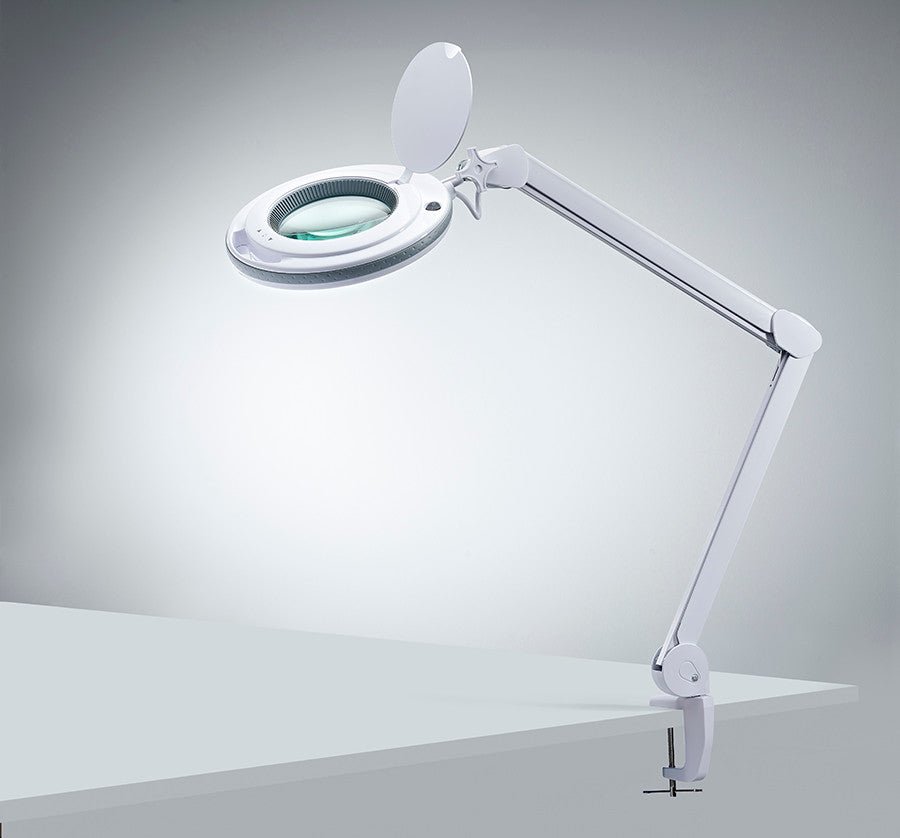
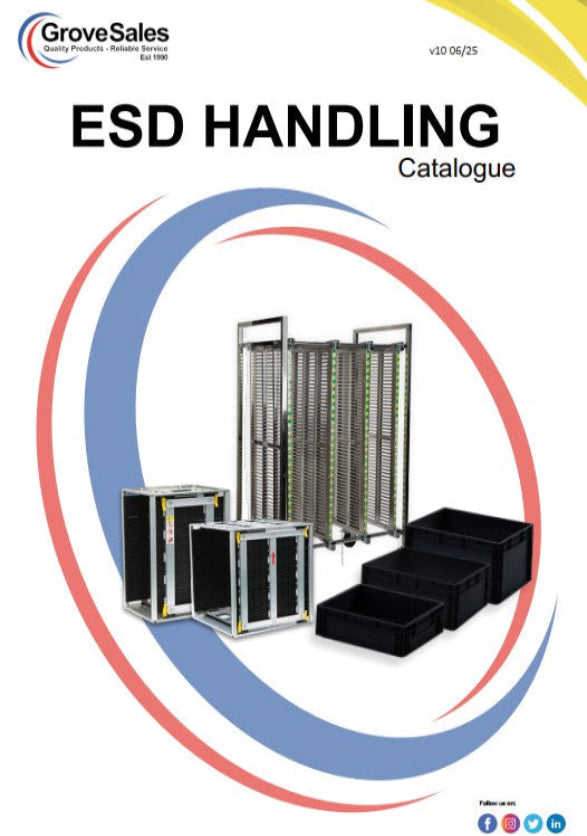
A complete workstation adds good task lighting and magnification (see our inspection & magnification guide), plus ESD-safe storage — shelving, bins, PCB racks and reel holders — to keep sensitive parts protected and the bench organised. Modular bench systems let you add uprights, shelves and lighting rails as you need them.
3.Choosing the bench
3.1ESD or standard?
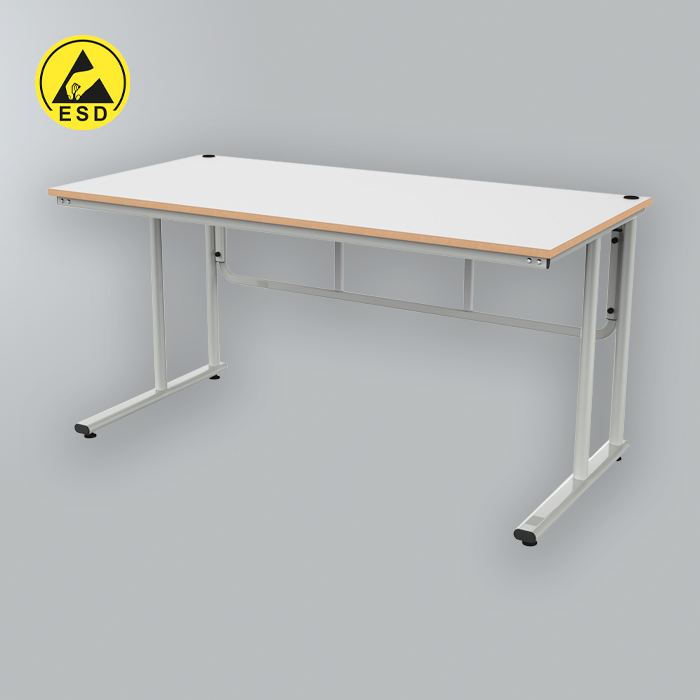
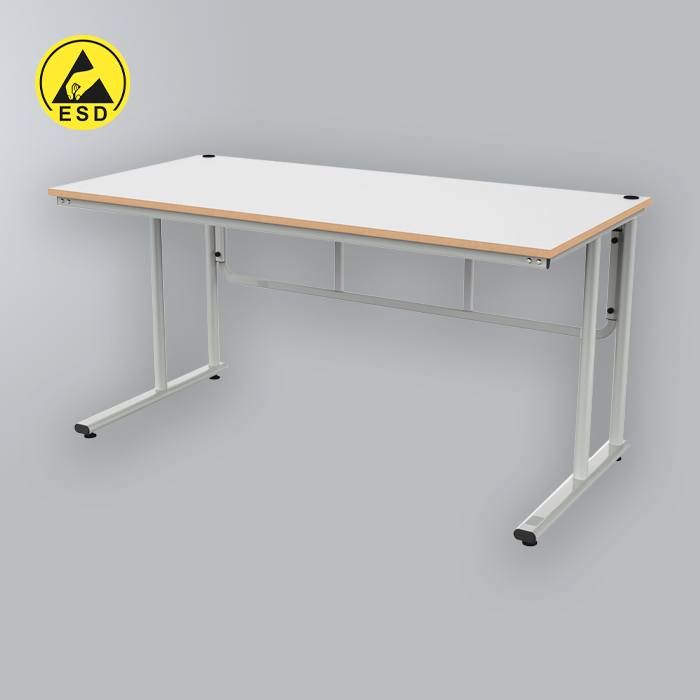
For any work on static-sensitive electronics, choose an ESD-safe bench with a dissipative worktop that bonds to ground. Standard (non-ESD) benches are fine for general assembly, packing and non-sensitive tasks. We stock both, in matching styles, so you can mix them across a workshop.
3.2Cantilever or fixed-leg?
Cantilever benches have no front legs, leaving clear, open space beneath for legroom, sub-benches and easy cleaning — ideal for comfortable seated work. Fixed-leg adjustable benches offer a heavier-duty frame and greater height adjustment, suited to heavier loads and where several operators share a bench. Both are available in ESD and standard versions.
3.3Size, height & ergonomics
Choose a worktop size and load rating to suit your work, and height adjustment to suit your operators — the right working height reduces fatigue and improves quality over a shift. Consider whether you need sit/stand flexibility, and leave room for lighting, magnification and storage above and around the top.
4.Building the workstation
A complete, compliant ESD workstation brings the pieces together:
| Element | Purpose |
|---|---|
| ESD bench (or worktop + mat) | Dissipative, grounded work surface |
| Earth bonding lead + common point | Ties everything to a single ground |
| Wrist strap (+ tester) | Grounds the seated operator |
| ESD chair | Keeps the operator at bench potential |
| Lighting & magnification | Clear, comfortable view of the work |
| ESD storage & accessories | Protects parts and organises the bench |
5.The ranges we stock
- ESD & standard cantilever benches — open-legroom workstations for comfortable seated work.
- ESD & standard fixed-leg adjustable benches — heavy-duty, height-adjustable frames.
- ESD chairs — dissipative, ergonomic seating.
- Bench accessories — uprights, shelving, lighting rails, bins and more.
- ESD storage — PCB racks, reel holders, trolleys and containers.
Planning a bench or a full workshop fit-out? Call us on 01202 588900 — we'll help you specify a compliant, ergonomic setup, with trade pricing for workshops and OEMs.
ESD workbenches & seating


6.Common questions
Do I need an ESD bench, or is a mat enough?
A grounded ESD mat on a standard bench is an effective, economical solution. A purpose-built ESD worktop adds durability and a fully integrated surface. Either way, the surface must be bonded to a common ground.
Cantilever or fixed-leg?
Cantilever benches give open legroom and a clean underside; fixed-leg adjustable benches handle heavier loads and offer more height adjustment. Both come in ESD and standard versions.
Does the chair really need to be ESD?
Yes, for seated work on static-sensitive electronics — the chair grounds the operator and keeps them at the same potential as the bench.
How do I stay compliant?
Follow BS EN 61340-5-1: bond everything to a common ground, and verify with periodic surface-resistance testing and per-shift strap/footwear checks.