


How to Desolder Components — Through-Hole & SMD
A practical desoldering reference for electronics technicians and engineers: the right tool for every job, clean component removal without lifting pads, and how to choose braid, pumps, desoldering stations and hot-air nozzles.
Contents
1.Introduction — why desoldering is the hard part
Soldering adds a controlled amount of molten metal to a clean joint. Desoldering is harder: you have to re-melt an existing joint and remove that metal cleanly, without over-heating the copper pad, lifting a track, or damaging the component you are trying to save. The single most common cause of PCB damage during repair is not soldering — it is forcing a part free before the solder is fully molten, or holding heat on a pad for too long.
This guide covers competent desoldering of both through-hole and surface-mount (SMD) assemblies, consistent with the techniques defined in IPC-7711/7721 (Rework, Modification and Repair of Electronic Assemblies). It is a deep-dive companion to our full ECB Repair & Rework Guide, which sets desoldering in the wider repair workflow.
2.Safety, ESD & Fume Extraction
- Board de-energised. All desoldering is carried out with the assembly powered down and discharged (Electricity at Work Regulations 1989).
- Full ESD precautions. Work on a grounded ESD mat wearing a tested wrist strap, both bonded to a common point, per BS EN 61340-5-1. Removed components go straight into ESD-safe packaging.
- Fume extraction is more important during desoldering. You are re-melting old, often heavily-fluxed solder and adding fresh flux — that generates more fume than first-time soldering. Position point-of-source extraction within 150 mm of the work.
3.Desoldering tools — the right one for the job
No single tool is best for every job. Matching the method to the joint is what separates a clean removal from a lifted pad.
| Tool | Best for | Notes |
|---|---|---|
| Solder sucker / pump | Clearing through-hole joints; bulk solder removal | Fast and cheap; keep the nozzle clean and the seal good |
| Desoldering braid (wick) | Cleaning pads, SMD bridges, fine work | Pre-flux for absorption; match width to the pad |
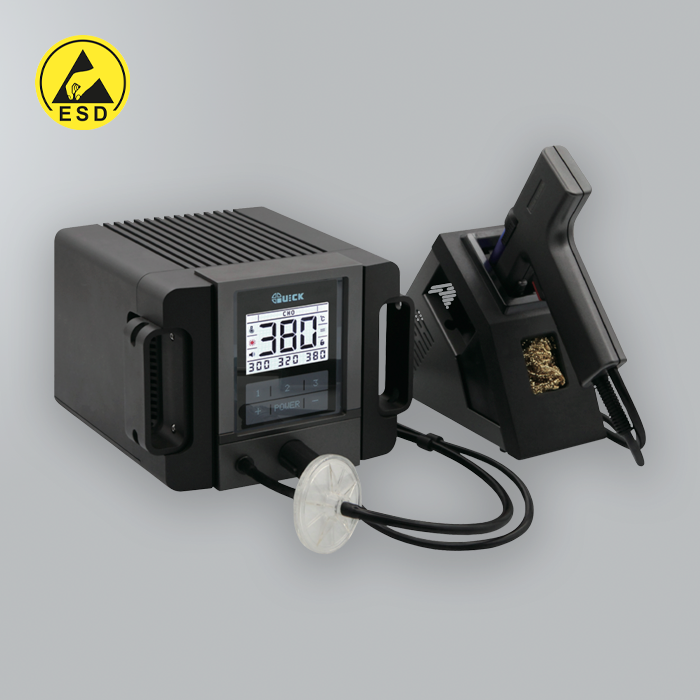
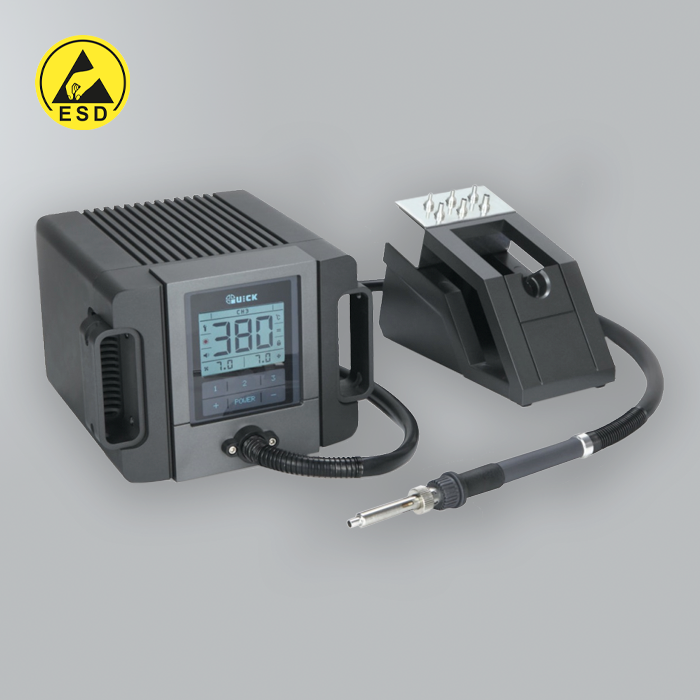
| Desoldering iron / vacuum station | Multi-pin through-hole ICs and connectors | Heat and vacuum in one tool — the professional through-hole choice (e.g. Weller WXDP 120 / WXDV 120) |
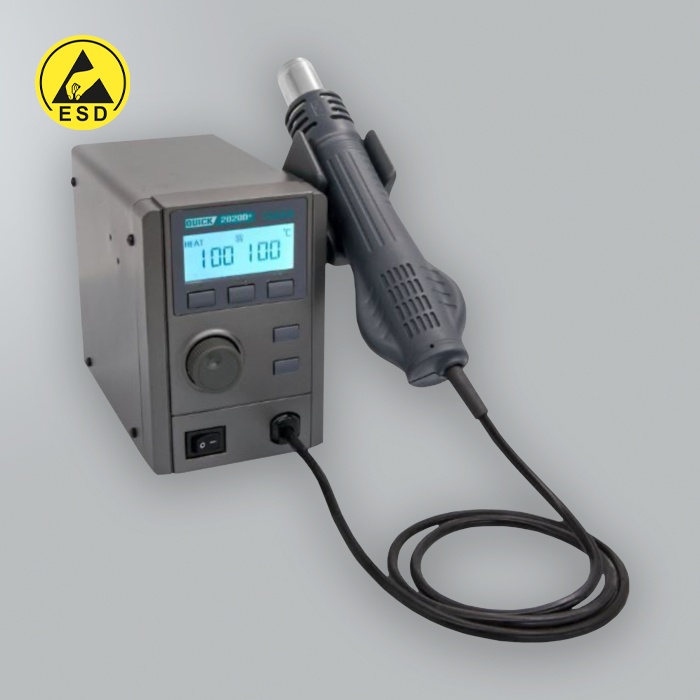
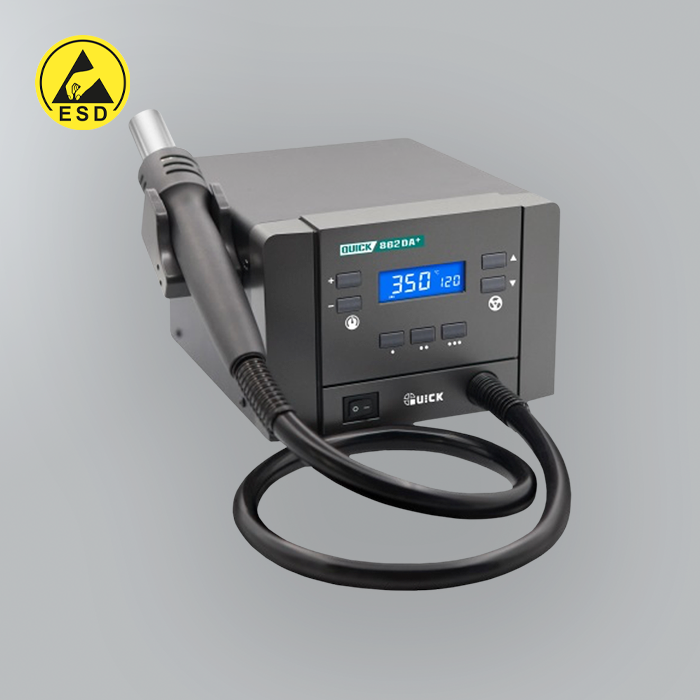
| Hot air rework station | Nearly all SMD removal | Match the nozzle to the package; control airflow to avoid blowing parts off |
| Desoldering tweezers | 2-terminal passives, small SOIC/SOT | Heats both ends at once and lifts in one motion |
4.Through-Hole Desoldering
4.1Solder sucker / pump method
- Apply fresh flux to the joint on the solder side of the board.
- Heat the joint with the iron until the solder is fully liquid — add a touch of fresh solder if the old joint is dull or lead-free; fresh solder carries flux in and melts more evenly.
- Charge the sucker, place the nozzle squarely over the joint, keep the iron in contact, and trigger.
- Remove the iron and inspect; repeat if solder remains in the barrel.
- Confirm the lead moves freely in the hole before attempting to withdraw the component.
4.2Desoldering braid method
- Pre-flux the braid to improve absorption.
- Lay the braid flat over the joint and press the iron onto it.
- Hold until you see solder wick up into the braid.
- Lift the iron and braid together — never peel cold braid off a joint, it can lift the pad with it.
- Cut away the used section and repeat.
4.3Desoldering iron / vacuum station method
For multi-pin through-hole ICs, connectors and headers, a desoldering iron or vacuum station (heated hollow tip with built-in suction, such as the Weller WXDP 120 or WXDV 120) is far faster and safer than a sucker-and-iron.
- Select a desoldering tip whose bore matches the lead diameter.
- Apply flux; place the heated hollow tip over the lead so the solder melts and fills the tip.
- Gently rotate the tip so the lead breaks free inside the barrel, then trigger the vacuum.
- Move to the next pin; work around the part until every lead is free.